Sunday, April 7, 2019

LINK to a Particular Spot in a GOOGLE DOC

Did you know that you can LINK to a particular spot in a Google Doc?  


YES YOU CAN!


If you don't need the entire document and only need to link the reader to a PARTICULAR spot in a document you can do with by using a BOOKMARK.

A WHAT?

A BOOKMARK!

Yes, it is that simple.  Just put a BOOKMARK in your document.

How do I do that?  I'm sure you are asking yourself that question. WELL...... it's your lucky day because I am going to tell you!

In your Google Doc, go to the spot you want them to read.  For example you want to point directly to your references part of your document. 

Put your mouse/cursor on that spot and click so that it is blinking.
Then click INSERT at the top in the menu bar. 


It gives you the drop-down menu and you click on BOOKMARK, which is at the bottom of the list.
It will then give you a BLUE FLAG. 

For example:
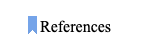


You will get a menu that says


Then you will need to RIGHT CLICK on the word LINK.  

A menu will pop up and you need to click on COPY LINK ADDRESS.


Now you can PASTE the link where ever you need it.

BOOM! DONE!
You now have a link that will take you directly to your references or whatever it is that you need. 

IT IS THAT SIMPLE!  YOUR WELCOME!  :)


Sunday, February 24, 2019

Assignment 5

When starting an organization change you have to start with a Why Statement. It needs to speak to the heart as well as the mind with a great a sense of urgency. Simon Sinek says in his TED Talk video, "People don't buy what you do, they buy why you do it.” In order to help bring your “why” to life, you must know why you are doing what you are doing. You must have passion and drive with purpose so other people can feel your energy and you can lead by example.

In order to implement my innovation plan of using ePortfolios in Pre-K, I need to develop my path, plan, and strategies like Influencer Strategy A and B and 4DX Plan. This plan helped me derive at my WIG (Wildly Important Goal). Next, we are going to use our lead measures to make changes. Our lag measure is to get the students involved and to use their ePortfolios. The scoreboard is the most valuable component in my opinion. This represents where we are headed and where we want to go. It provides motivation and inspiration to complete our WIG. Lastly, we are going to hold each other accountable by meeting once a week to ensure we are on target. Utilizing all the research I have learned in this class, I am confident we will "win" or complete our goal with ePortfolios in Pre-K.

One of my favorite parts of this plan is the scoreboard. I know the students will love having a visual representation of what they are doing. Students at this age are "reading" pictures, so having something they can see on a regular basis will help them stay focused and help motivate them to reach their own personal goal.

Teachers are focused on their own priorities and are trying to avoid the whirlwind. After learning about the six sources of influence and seeing the “All Washed Up” video, I knew that I would need to incorporate as many sources as possible. As they mentioned in the video, you need at least four sources of influence to increase the chances of success by 10 times.

It is important to have some conversations with others. Crucial conversations are happening all day every day with many people in one day. It might be your co-worker, husband, or a student. When you are having these conversations you have to keep your emotions in check and think through your words.

In the book, Crucial Conversations (Patterson, Grenny, McMillan, & Switzler, 2012) they say there are three parts to a conversation (p.3). The parts are: opinions vary, the stakes are high, and emotions are strong.

The book also mentions that people fall into different categories (p.13). Those categories are: People who make threats or call people names, others are fuming without talking, and people who can speak openly and honestly.

I seemed to connect with the information in Chapter 7 - State my Path: How to Speak Persuasively Not Abrasively. I made a graphic (or click here for the pdf) that will help me with my upcoming conversations.


Henri Matisse said, "Creativity takes courage". When making changes you do have to be creative and a forward thinker. As I read the book, I did some personal reflection. There are 7 necessary steps. "Words do matter" (p.102). When having conversations with others about sensitive subjects, we have to choose our words carefully.


I am becoming a self-differentiated leader using the conversation skills that I have learned. First, I will create a safe environment to have a discussion. Next, I will be a role model on how to keep my emotions in check. Finally, I will keep my goal in mind during these conversations. I have to keep myself in order because I am the only one that I can control during the conversation. I need to make sure my vision is clear and know what I want from these conversations.


As a leader, I have to make sure I don't get caught up in the whirlwind and keep the conversation focused. I have to pay attention to early warning signs so I can keep things on track. I also have to keep my emotions in check. Teachers want what is best for their students, so their emotions will run high and some will be quick to anger. In order to keep things focused, we have to be respectful and show that we care. I will let the other teachers know that we are in this together and that I care about what they have to say and how they feel. When we are upset, we tend to blame others. We have to share our stories and refrain from hurting one another. I will encourage others to share their thoughts and feelings as well. I will listen to others when exploring their paths. I will consider their thoughts and opinions. With all that I have learned we will get "unstuck" and be able to move forward with the plan of ePortfolios.


In the end, people handle conversations differently. They can either avoid you, handle it poorly, or handle it well. Although, most people are not a fan of change, change is going to happen. If change is done in steps and over time, we can change our views toward change. After clarifying our why, using the influencer model and the 4DX, together we will use self-differentiated leadership and crucial conversations to move forward with positive changes for these pre-k students and their ePortfolios. By using the books, assignments, and knowledge I gained in this class, I am confident we will do what is best for the students and we will be successful.


REFERENCES

All Washed Up! (2010). Retrieved July 28, 2016, from https://youtu.be/osUwukXSd0k
Camp, J. [Mathew David Bardwell]. (2010, November 10). Friedman's theory of differentiated leadership made simple [Video file]. Retrieved from https://www.youtube.com/watch?v=RgdcljNV-Ew&feature=youtu.be
Chesney, C., Covey, S. & Huling, J.  (2012) The 4 disciplines of execution.  New York, NY: Franklin Covey Co.
Grenny, J., Patterson, K., Maxsfield, D., McMillan, R. & Switzler, A.  (2013). Influencer: The new science of leading change (2nd ed.). Provo, UT:  VitalSmarts, LLC.
Patterson, K., Grenny, J., McMillan, R., & Switzler, A.  (2012). Crucial conversations: Tools for talking when stakes are high. New York: McGraw-Hill.
Sinek, S. (2009). Start with why: How great leaders inspire everyone to take action.  New York, N.Y.: Portfolio.

Sinek, S. (2014, March, 3). Start with why: Ted talk. [video file]. Retrieved from https://www.youtube.com/watch?v=IPYeCltXpxw

Saturday, February 23, 2019

Discussion 5

Participate in a class discussion in which you begin by addressing the following issues/questions:

How is effective leadership an emotional process of regulating one's own anxiety?
How is the self differentiated leader equivalent to the emotional immune system of the organization?

How can emotional triangles impact your change efforts?

What does sabotage really indicate?

What are the crucial conversations you need to have to get the results you want?

Why do need a strategy to deal with conversations that have high stakes, strong emotions and differing opinions?

Discuss how using the following crucial conversations process can help you in moving your change strategy forward:
  • Get unstuck
  • Start with the heart
  • Learn to look
  • Make it safe
  • Master my stories
  • STATE my path
  • Explore other paths
  • Move to action
  • What do you need to focus on more significantly in your change strategy - differentiated leadership or crucial conversations? Why?
  • Or, If you see that you want to work with both ideas which strategy have chosen to work with first and why?
Please remember the list of questions are for your benefit and are intended to help you focus your thinking. We are not asking nor expect you to answer each question in your discussion--rather you should use these questions to help focus on how the insights gained through this discussion will help you to add another component to your innovation plan.

My school has had a lot of changes in the last several years.  We usually don’t keep a principal
very long until this one. The “powers that be” are always adding and taking away things, new
programs, “must haves” etc.  People are not a fan of starting new things because they know it
probably won’t stick around long. The upper grades are very overwhelmed with all they have to
do to prepare for the STAAR.  I am glad that I am not in their shoes. Everyone wants to do what
is best for the kids, but go about it in a different way.


When people have mutual respect we can have a great conversations.  There are four stages in
the book.First, see/hear - we need to get the facts, tell story (in our own head).  Sometimes we carry around stories that are not true. We have to change the stories we tell ourselves and retrace your steps.  We have to take control of the stories. Next is feel, which is to get in touch with the emotions. Then, act which is notice the behaviors.  We need to share our opinion, not try to disguise it as a fact. We also need to encourage other to share their information, even if we might disagree with them.  When talking to the other teachers, I will make them feel valued and respect their thoughts and feelings in the process. I will need a plan of action for these conversations so things don’t get out of control or side-tracked.  Sabotage indicates a good leader according to the book.


Having conversations with other teachers can be tricky.  I don’t want to overload anyone with
something new, but I do want to share what I have learned and try to get others on board.  I
have to stay focused and ignore the whirlwind around me. “Don’t get triangled” as they said
in the video.  My grandma used to say, “Misery loves company.”  I try to stay clear of negative
energy. It is not good for my health.  

Patterson, K., Grenny, J., Switzler, A., & McMillan, R. (2012). Crucial conversations: Tools for
talking when the stakes are high. New York: McGraw-Hill.

Summary with Book Creator

I decided to add one more thing to my website and to this blog.  I used Book Creator to make a summary of my DLL journey. Click below t...